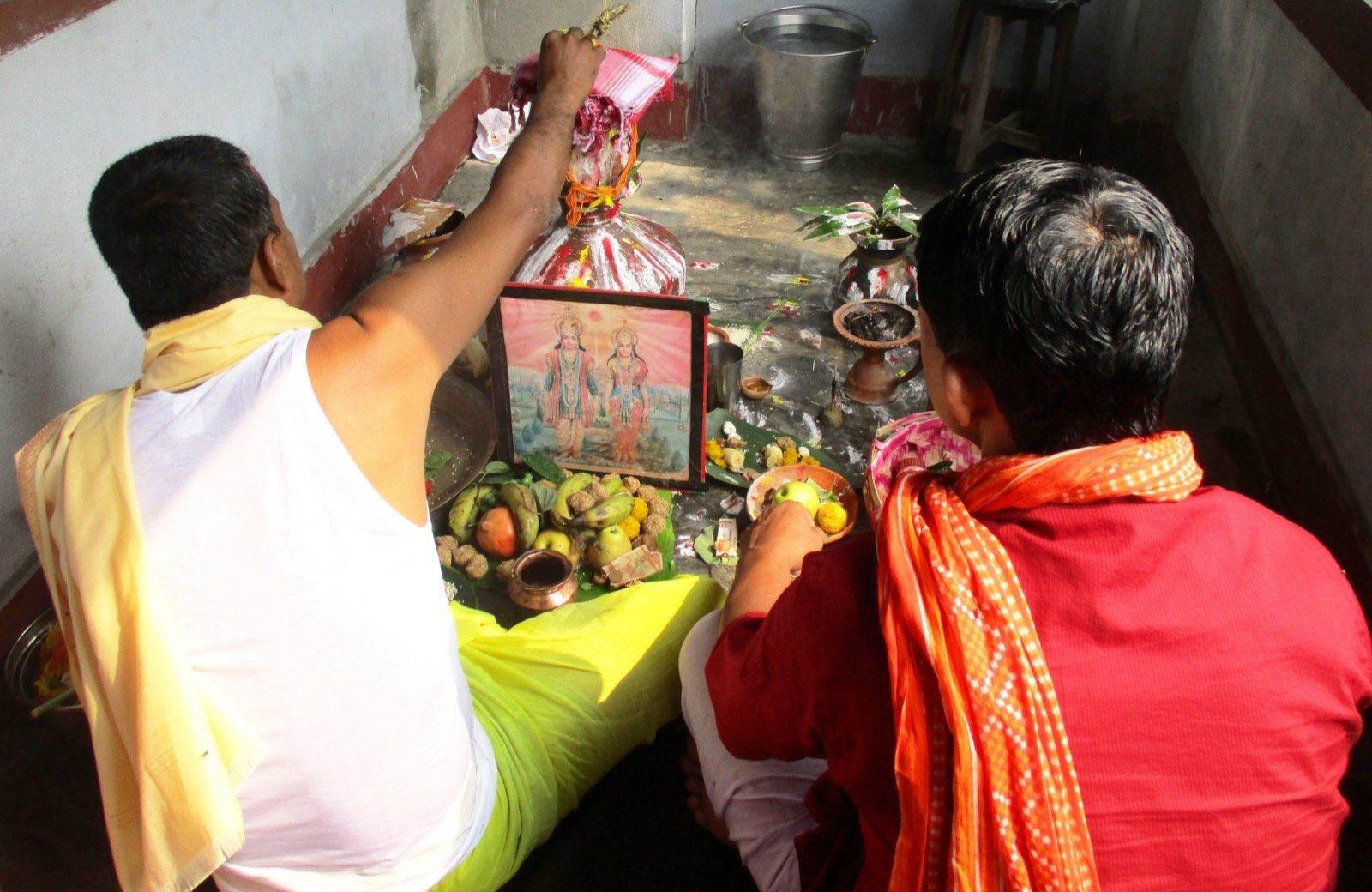
Photo: "Shree Satyanarayan Bhagwan Puja" by Subhmanish, CC BY-SA 4.0, via Wikimedia Commons
Few Pujas are as widely performed across Indian households as the Satyanarayan Katha. Celebrated after a housewarming, a wedding, a childbirth, a recovery from illness, or simply on a full moon evening, this ritual worship of Lord Vishnu brings families and neighbours together in a way few other observances do — around a shared story, a shared prasad, and a shared sense of gratitude.
What Is Satyanarayan Katha?
"Satyanarayan" literally means "the true (Satya) form of Narayan," referring to Lord Vishnu as the eternal upholder of truth. The Puja centres around the narration of the Satyanarayan Katha — a set of stories from the Skanda Purana in which Lord Vishnu, appearing to the sage Narada, describes how sincerely performing this Puja after making a vow (Sankalp) brings prosperity, while neglecting a promised Puja invites hardship.
Unlike many Pujas tied to a fixed date, Satyanarayan Katha can be performed on almost any day, though Purnima (the full moon) is considered especially auspicious. It is commonly observed to mark a happy occasion, to fulfil a vow made during a difficult time, or simply as an expression of gratitude and faith.
When Is It Performed?
| Occasion | Significance |
|---|---|
| Purnima (Full Moon) | Considered the most auspicious day for Satyanarayan Puja every month |
| Housewarming (Griha Pravesh) | Performed to invite prosperity and positive energy into a new home |
| Marriage & childbirth | Observed to seek blessings for a new phase of family life |
| Fulfilment of a vow (Mannat) | Performed after a wish is fulfilled, in keeping with a promise made to Lord Vishnu |
| Recovery from illness or hardship | Observed in gratitude after overcoming a difficult period |
Puja Samagri Required
- A photo or idol of Lord Vishnu and Goddess Lakshmi
- A Kalash (sacred vessel) filled with water, topped with mango leaves and a coconut
- Panchamrit (milk, curd, honey, ghee and sugar)
- Bananas, seasonal fruits, and Tulsi leaves
- Rava (semolina), ghee, sugar and milk for the Prasad (Kada Prasad / Sheera)
- Incense sticks, a diya, and a copy of the Satyanarayan Katha for recitation
The Five Chapters of the Katha
The Satyanarayan Katha is traditionally narrated in five short chapters (Adhyay), each illustrating the same central message through a different story.
| Chapter | Core Message |
|---|---|
| Chapter 1 | Lord Vishnu describes the Puja to Narada as a simple way for anyone to attain happiness and fulfilment |
| Chapter 2 | A poor Brahmin's life is transformed after performing the Puja with sincere devotion |
| Chapter 3 | A woodcutter's fortunes change after he observes the Puja, showing its relevance across all walks of life |
| Chapter 4 | A merchant and his family face hardship after forgetting a promised Puja, until it is finally performed |
| Chapter 5 | A king learns that devotion and humility matter more than status or wealth in performing the Puja |
Across all five chapters, the recurring theme is not superstition but sincerity — the Puja is less about ritual perfection and more about gratitude, honesty, and keeping one's word.
How It Is Performed
- Sankalp — the devotee declares their name, gotra, and the intention behind the Puja.
- Kalash and Idol Sthapana — the sacred vessel and the image of Lord Vishnu and Goddess Lakshmi are ceremonially installed.
- Katha Path — the five chapters of the Satyanarayan Katha are read aloud, often by a Purohit, with family and guests listening together.
- Aarti — performed at the conclusion of the Katha, with all present participating.
- Prasad Distribution — the Sheera (Rava Prasad) is distributed to everyone present, and traditionally shared with neighbours as well.
Frequently Asked Questions
Can Satyanarayan Katha be performed at home without a Purohit?
While the Katha can be read by any devotee, most families prefer a qualified Purohit to guide the Sankalp, Kalash Sthapana, and Puja Vidhi correctly, ensuring the ritual is performed as per tradition.
Is it necessary to invite guests or neighbours?
It is not mandatory, but sharing the Prasad and the Katha with family, friends, and neighbours is considered an important part of the observance, reflecting the values of generosity and community central to the ritual.
Can it be performed for no specific reason, just out of devotion?
Yes. While Satyanarayan Katha is often tied to a specific occasion or vow, many families also perform it simply as a monthly or annual practice, out of ongoing devotion to Lord Vishnu.
Book Your Satyanarayan Puja with DevPitra
DevPitra connects you with experienced, verified Purohits who can perform your Satyanarayan Katha with complete Vedic tradition — at home, or through a live online ceremony for family members joining from anywhere.