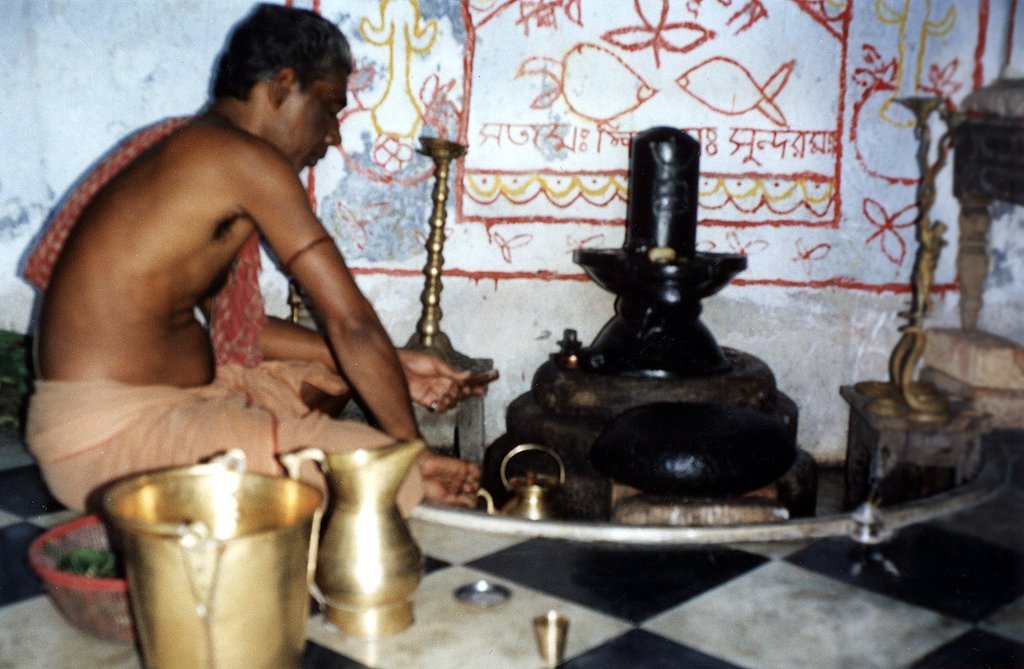
Photo: "Puja im Shivatempel" by Christina Kundu, public domain, via Wikimedia Commons
In an age of deadlines, traffic, and constant notifications, more and more people are turning back to an ancient practice for a sense of calm — Rudrabhishek, the ceremonial bathing of the Shiva Lingam. Performed in temples and homes across India every Monday, and especially during Shravan and Maha Shivratri, this ritual is valued not only for its spiritual depth but for the very real sense of peace, focus, and resilience it brings to those who observe it.
What Is Rudrabhishek?
"Rudra" is the fierce, primal form of Lord Shiva described in the Rig Veda and Yajurveda, associated with the power to destroy suffering and obstacles at their root. "Abhishek" refers to the ceremonial bathing or anointing of a deity's image or symbol. Rudrabhishek, therefore, is the ritual bathing of the Shiva Lingam with sacred substances while chanting Vedic hymns dedicated to Rudra — most commonly the Rudrashtadhyayi, which includes the Namakam and Chamakam from the Yajurveda.
Unlike a simple daily puja, Rudrabhishek is a more elaborate ceremony, typically performed by a qualified Purohit or Acharya who is trained in the correct pronunciation and sequence of the Vedic mantras, which are believed to carry much of the ritual's power.
Materials Used in the Abhishek
Each substance offered during Rudrabhishek carries its own symbolic meaning, poured over the Lingam in a specific sequence, usually followed by a final bath of pure water.
| Offering | Symbolic Significance |
|---|---|
| Milk (Doodh) | Purity, nourishment, and the calming of the mind |
| Curd (Dahi) | Prosperity and the strengthening of family bonds |
| Honey (Shahad) | Sweetness in speech and harmony in relationships |
| Ghee | Strength, victory, and the removal of obstacles |
| Sugar (Sharkara) | Joy and the sweetening of one's circumstances |
| Ganga Jal | Purification of the mind, body, and surroundings |
| Bilva Patra (Bel leaves) | Considered especially dear to Lord Shiva, offered for his blessings |
These five core items — milk, curd, honey, ghee, and sugar — are together known as Panchamrit, the "five nectars" central to most Abhishek rituals across Hindu tradition.
When Is Rudrabhishek Performed?
| Occasion | Why It Is Considered Auspicious |
|---|---|
| Every Monday (Somvar) | The day of the week traditionally associated with Lord Shiva |
| Pradosh Vrat | Observed twice a month during twilight hours, believed to be especially powerful for removing sins and obstacles |
| Maha Shivratri | The most significant night dedicated to Lord Shiva in the Hindu calendar |
| Shravan Month | An entire month considered sacred to Shiva, when Abhishek is performed daily in many temples |
| Personal milestones | Health concerns, Shani Sade Sati, career hurdles, or before starting a major new venture |
Benefits of Rudrabhishek
- Removal of obstacles — traditionally believed to clear recurring hurdles in personal, professional, and family life.
- Health and longevity — closely associated with the Maha Mrityunjaya Mantra, chanted for protection from illness and untimely difficulties.
- Relief from planetary doshas — often recommended by astrologers for those going through Shani Sade Sati, Rahu-Ketu, or other challenging planetary periods.
- Mental peace and focus — the rhythmic chanting and ritual structure are widely experienced as deeply calming and grounding.
- Career and business growth — many families perform Rudrabhishek before major decisions, launches, or examinations.
- Marital and family harmony — performed to resolve ongoing conflicts or delays in marriage within the family.
How Rudrabhishek Is Performed
- Sankalp — a formal declaration of intent, stating the devotee's name, gotra, and the specific purpose of the ritual.
- Ganesh Puja — a preliminary invocation to Lord Ganesha, performed before any major ritual to remove obstacles.
- Kalash Sthapana — the ceremonial placement of a sacred water vessel representing the presence of divinity.
- Chanting and Abhishek — the Rudrashtadhyayi (Namakam-Chamakam) or Maha Mrityunjaya Mantra is chanted while the Panchamrit and other offerings are poured over the Shiva Lingam in sequence.
- Aarti and Prasad — the ritual concludes with an Aarti and distribution of Prasad to all present.
Frequently Asked Questions
Can Rudrabhishek be performed at home, or does it need a temple?
It can be performed at home with equal devotion, provided a qualified Purohit conducts the mantras correctly. Many families choose to perform it at a Shiva temple for the added significance of the sacred space, while others prefer the convenience and intimacy of a home ceremony.
How long does a Rudrabhishek ceremony usually take?
A standard Rudrabhishek typically takes 45 minutes to about 2 hours, depending on whether it includes a single chanting of the Rudrashtadhyayi (Ek Avritti) or multiple repetitions (Ekadash Avritti — eleven times), which are considered more elaborate and powerful.
Can it be performed for a specific concern, such as a family member's health?
Yes. The Sankalp at the start of the ceremony allows the Purohit to dedicate the ritual to a specific person and intention, such as recovery from illness, success in an upcoming exam, or resolution of a long-standing family concern.
Book Your Rudrabhishek with DevPitra
DevPitra connects you with experienced, verified Purohits who can perform Rudrabhishek for you — at home, at a temple, or through a live online ceremony — with complete adherence to Vedic tradition.